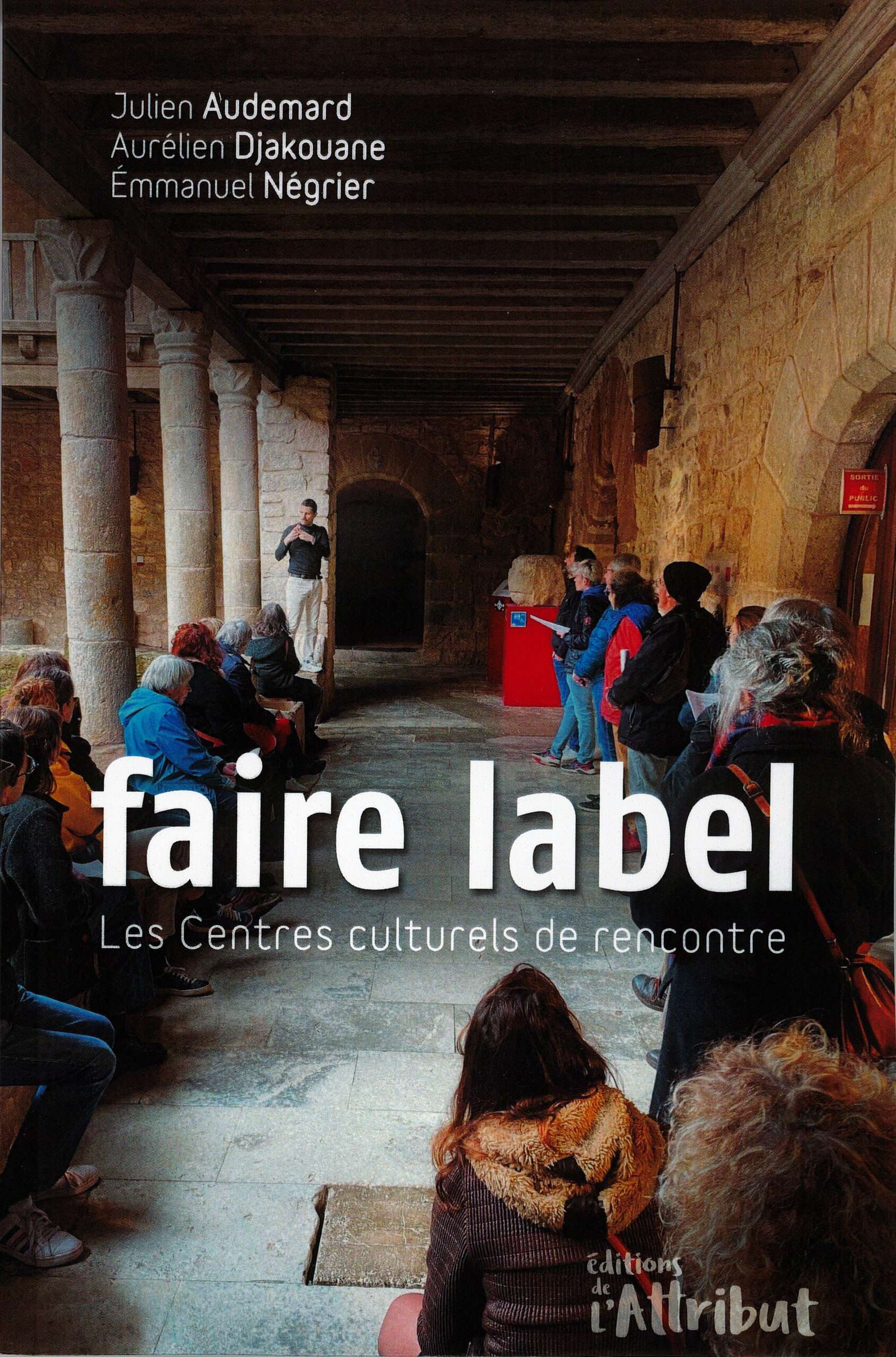
Published by: Faire label. Cultural Encounter Centers
Established in 1972 by the Ministry of Culture, the “Cultural Encounter Center” remains relatively unknown on the national scene, even though it comprises twenty-three venues, not counting its international network.
Based on a study conducted by Julien Audemard, Aurélien Djakouane, and Emmanuel Négrier to gain a better understanding of this label, this book sheds light on an interesting variety of places and projects—ranging from the arts to heritage and culture.
What sets this label apart is that it is the only one situated at the intersection of the fields of the creative arts, cultural heritage, and the cultural industries. The extreme diversity of its projects embodies a well-known artistic and cultural ambition.
The authors rightly point out one of the paradoxes of the CCR label: building a network based on the very distinct artistic, cultural, and regional characteristics of each project.
The label deserved to be examined in terms of its history, its internal consistency, and the support it receives through partnerships.
The research and the resulting book aim to lay the groundwork for a long-term observatory of cultural encounter centers, focusing on three dimensions: organizational, sociological, and political
Partnership with CEPEL, the Ministry of Culture, and the Association of Cultural Encounter Centers
Julien Audemard isan associate professor of political science at the University of Montpellier and a researcher at CEPEL.
Aurélien Djakouane is an associate professor of sociology at the University of Paris Nanterre and a researcher at SOPHIAPOL.
Emmanuel Négrier is a CNRS research director and director of the Center for Political and Social Studies (CEPEL) at the University of Montpellier.
More information: link