Tiffany Matias's Thesis Defense
The New Spirit of the SNCF
: Digital Transformation as a Way to Move Beyond the Neo-Managerial Turn in Public Enterprises
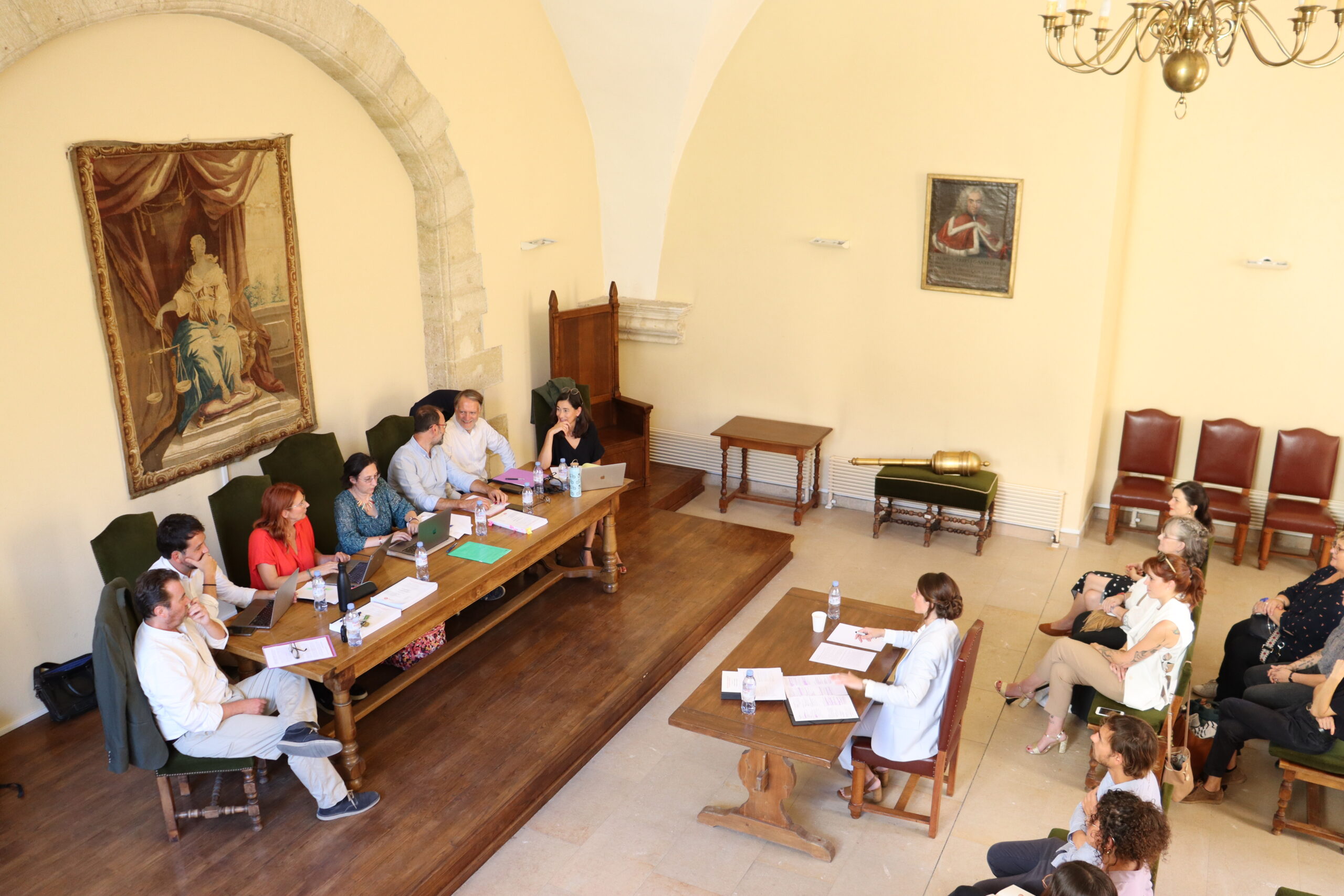
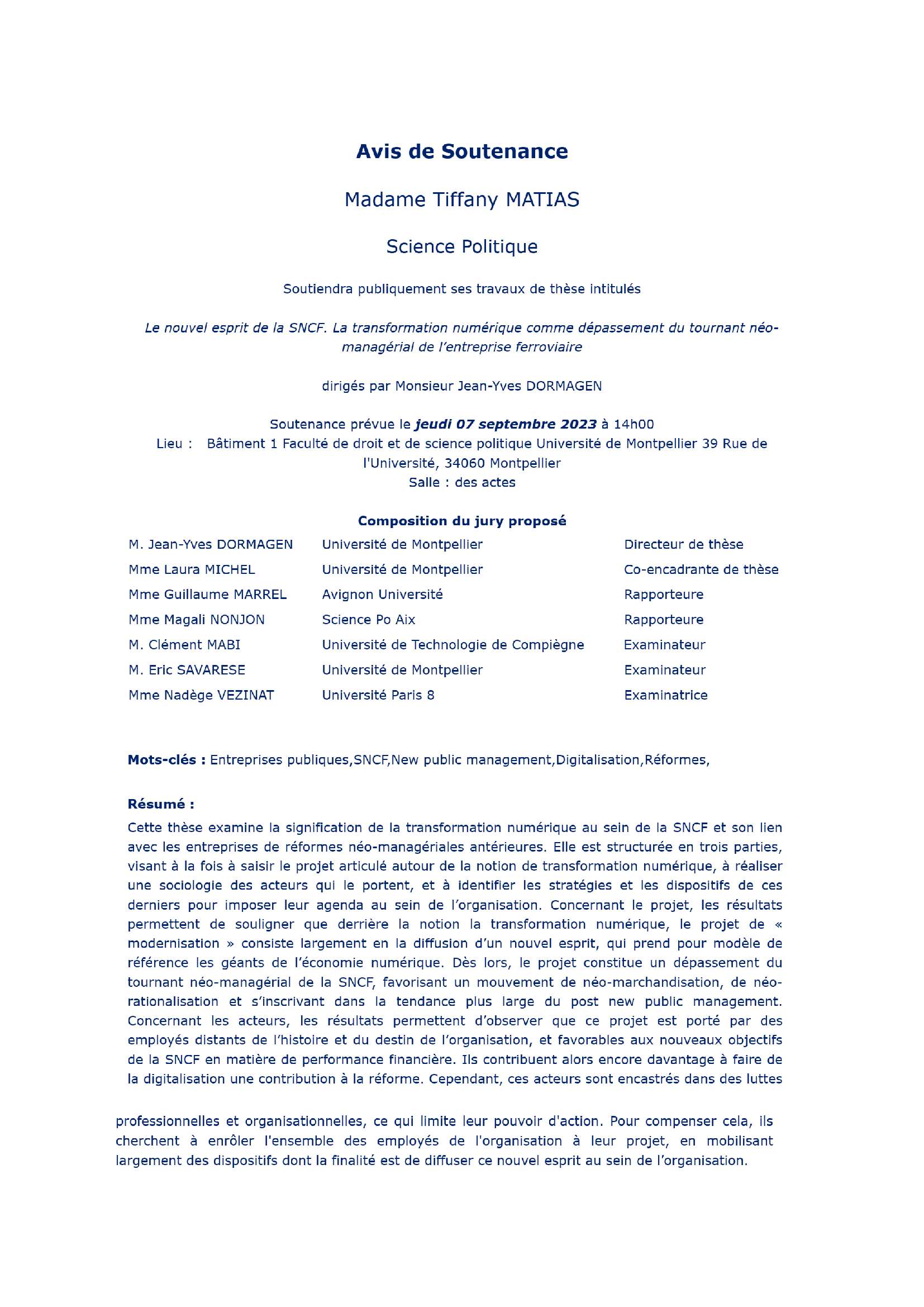
The thesis defense will take placeon Thursday, September 7, at 2:00 p.m. at the Faculty of Law and Political Science at the University of Montpellier ( Salle des Actes, Building 1). It will be followed by a reception to which you are also warmly invited.
The jury consists of:
Jean-Yves DORMAGEN, Professor, University of Montpellier (thesis advisor)
Laura MICHEL, Associate Professor, University of Montpellier (co-advisor)
Clément MABI, Associate Professor, Compiègne University of Technology
Guillaume MARREL, Professor, University of Avignon
Magali NONJON, Associate Professor, Sciences Po Aix
Éric SAVARESE, Professor, University of Montpellier
Nadège VEZINAT, Professor, University of Paris 8
Thesis Abstract:
This dissertation examines the significance of digital transformation within the SNCF and its connection to previous neo-managerial reform initiatives. It is structured in three parts, aiming to understand the project centered on the concept of digital transformation, to conduct a sociological analysis of the actors driving it, and to identify the strategies and mechanisms these actors use to impose their agenda within the organization. Regarding the project, the findings highlight that behind the concept of digital transformation, the “modernization” project largely consists of spreading a new mindset, which takes the giants of the digital economy as its model. Consequently, the project goes beyond the SNCF’s neo-managerial shift, promoting a trend toward neo-commodification and neo-rationalization, and is part of the broader trend of post-New Public Management. Regarding the actors involved, the findings reveal that this project is driven by employees who feel disconnected from the organization’s history and future and who support the SNCF’s new financial performance objectives. They thus contribute even more to positioning digitalization as a driver of reform. However, these actors are caught up in labor and organizational struggles, which limits their capacity for action. To compensate for this, they seek to enlist all employees of the organization in their project, making extensive use of mechanisms designed to spread this new mindset throughout the organization.
For logistical reasons, please let me know by return email if you would like to attend the defense.